One of the most common questions founders ask is whether they really need a lawyer—or whether online legal tools are “good enough.” The honest answer is that both have value, but they serve very different purposes.
Understanding the difference can save your start-up time, money, and serious legal risk.
This comparison breaks down lawyers vs online tools, when to use each, and why many modern start-ups use both together.
Option 1: Hiring a Business Lawyer
What a Business Lawyer Does Well
A qualified business lawyer brings: to
- Legal expertise and professional judgment
- Advice tailored to your jurisdiction and business model
- Negotiation support with other parties
- Accountability and legal liability for their work
Lawyers are essential for: and
- Incorporation and shareholder agreements
- Fundraising and equity structures
- Complex negotiations
- High-risk or high-value contracts
- Situations where the law is unclear or disputed
Limitations for Start-Ups
For early-stage businesses, lawyers can also present challenges:
- High hourly costs
- Slower turnaround times
- Over-lawyering low-risk situations
- Founders not fully understanding what they’re paying for
Many founders feel forced to trust blindly—signing what their lawyer prepares without fully understanding the trade-offs.
Option 2: Online Legal & Contract Tools
Online legal tools have grown rapidly and now play an important role in the start-up ecosystem.
What Online Tools Do Well
Modern tools can: and
- Explain contracts in plain language
- Highlight risky clauses
- Flag missing or one-sided terms
- Help founders prepare before legal review
- Reduce time spent on basic questions
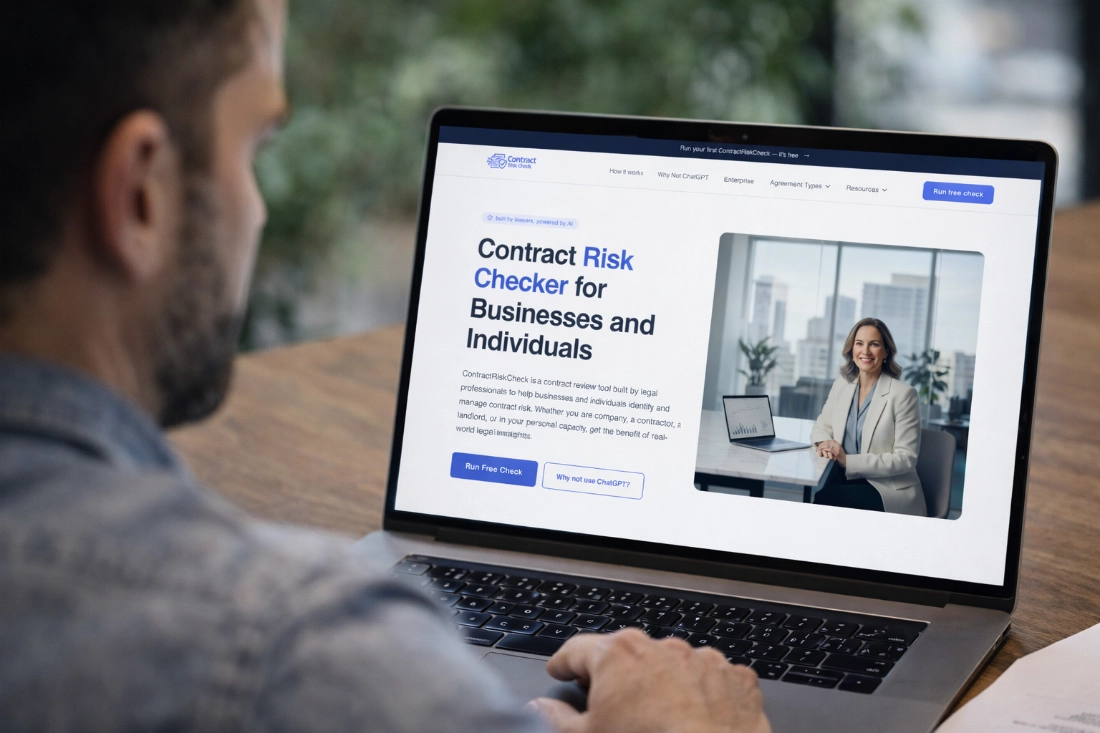
Platforms like contractriskcheck.com focus specifically on contract risk awareness, helping founders understand what they’re agreeing to before they sign.
Limitations of Online Tools
Online tools do not replace lawyers: but
- They don’t give legal advice
- They can’t negotiate on your behalf
- They don’t interpret the law in edge cases
- They don’t represent you if something goes wrongly
They are best used as decision-support tools, not final authorities.
The Real Question Isn’t “Lawyer or Tool?”
The smarter question is:
At what stage and risk level do I need each? I
Use a Lawyer When:
- Money, equity, or IP is on the line
- You’re raising capital
- You’re signing long-term or exclusive contracts
- You need jurisdiction-specific advice
- You want legal accountability
Use Online Tools When: and
- Reviewing standard commercial contracts
- Learning what clauses actually mean
- Preparing for a lawyer conversation
- Screening risk before signing
- Managing costs in early stages
Why Start-Ups Are Combining Both
More founders are using a hybrid approach:
- Review contracts with an online risk tool
- Understand the key risks and red flags
- Send focused questions to a lawyer
- Pay for strategic advice—not basic explanations
Using a tool like contractriskcheck.com before involving a lawyer can:
- Reduce billable hours
- Improve communication
- Prevent missed issues
- Increase founder confidence
Lawyers tend to work more efficiently when founders arrive informed and prepared.
What This Means for Founders
If you rely only on a lawyer:
- You may overpay for basic education
- You may not fully understand your contracts
If you rely only on tools:
- You may miss legal nuance
- You have no protection if something goes wrong
The most resilient start-ups:
- Use tools for understanding and awareness
- Use lawyers for judgment, negotiation, and protection
Final Verdict: Tools Don’t Replace Lawyers—They Make Them More Effective
Online legal tools are not a threat to lawyers—they’re a force multiplier for founders.
For start-ups navigating limited budgets and high uncertainty, combining:
- Contract risk tools for clarity
- Lawyers for expertise and protection
creates a smarter, safer, and more sustainable legal workflow.
If your goal is to move fast without breaking things, understanding when and how to use each option matters more than choosing sides.